Light of the World

Booklet 19
The
Good Shepherd and other parables
"I am the good shepherd; I know my sheep and my sheep know me. . . . My sheep listen to my voice; I know them, and they follow me. . . . My Father, who has given them to me, is greater than all; no one can snatch them out of my Father's hand" (John 10:14, 27, 29).
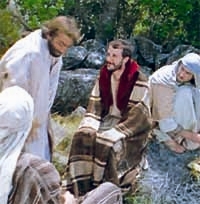 Three
apostles refer to Jesus as the Shepherd of the sheep. John calls Him the
Good Shepherd who laid down His life for the sheep (see John 10:11).
Paul refers to Jesus as the Great Shepherd who rose from the dead
(see Hebrews 13:20), while Peter honors Him as the Chief Shepherd
who is coming again (see 1 Peter 5:4).
Three
apostles refer to Jesus as the Shepherd of the sheep. John calls Him the
Good Shepherd who laid down His life for the sheep (see John 10:11).
Paul refers to Jesus as the Great Shepherd who rose from the dead
(see Hebrews 13:20), while Peter honors Him as the Chief Shepherd
who is coming again (see 1 Peter 5:4).
To represent the willing subjects of His kingdom, Christ used humble, faithful sheep—not goats, which are self willed (see Matthew 25:31-46).
Dwight L. Moody once said, "Christ's sheep have two marks—one in their ears—'they hear my voice,' and one in their feet—'they follow me.' "
David, the shepherd boy, sang in the pastures of Bethlehem, "The LORD is my shepherd, I shall not be in want" (Psalm 23:1). Jesus is the understanding Shepherd of His church on earth. He feeds His flock with the bread of spiritual life; He guides them in service; He teaches them how to pray; He protects them from the attacks of Satan; He binds up their wounds; He guides them into the true fold; He watches over them.
In this booklet we will join the crowds in Jerusalem who are listening to the wonderful parables of Jesus. As He speaks, we are led to think of Him as the Chief Shepherd of the church—counseling, instructing, guiding, and warning His flock.
HOW
DID CHRIST TEACH DEPENDENCE UPON GOD?
Jesus taught that the sheep must depend upon the shepherd in case they
go astray and be lost. "To some who were confident of their own righteousness
and looked down on everybody else" (Luke 18:9), Christ addressed
His stirring parable of the Pharisee and the tax collector.
We learn that the Master had only recently dined in the home of a Pharisee (see Luke 14:1). Soon afterward He met with a group of "tax collectors and 'sinners' " (Luke 15:1). He now contrasts the spirit of these two groups. Let's listen carefully to the important lesson He teaches:
"Two men went up to the temple to pray, one a Pharisee and the other a tax collector. The Pharisee stood up and prayed about himself: 'God, I thank you that I am not like other men—robbers, evildoers, adulterers—or even like this tax collector. I fast twice a week and give a tenth of all I get.' But the tax collector stood at a distance. He would not even look up to heaven, but beat his breast and said, 'God, have mercy on me, a sinner.' I tell you this man, rather than the other, went home justified before God. For everyone who exalts himself will be humbled, and he who humbles himself will be exalted" (Luke 18:10-14).
 The
proud Pharisee in this parable presents a picture of self righteousness
and self praise. He believes that his prayers will earn God's favor. Those
who watch him can almost hear him say, "Don't come near me, for I
am holier than you." He doesn't really pray to God; he prays "about
himself" (Luke 18:11).
The
proud Pharisee in this parable presents a picture of self righteousness
and self praise. He believes that his prayers will earn God's favor. Those
who watch him can almost hear him say, "Don't come near me, for I
am holier than you." He doesn't really pray to God; he prays "about
himself" (Luke 18:11).
But the poor tax collector presents a different picture. He does not mingle with the other worshipers, but draws apart by himself and "would not even look up to heaven, but beat his breast" (Luke 18:13). He knows that he has no merit to commend himself to God, so he pleads for mercy, "God, have mercy on me, a sinner" (Luke 18:13). How he longs for peace and pardon!
Now, which of these men was blessed? Jesus said, "I tell you that this man [the tax collector], rather than the other [the Pharisee], went home justified before God" (Luke 18:14). The tax collector received help, because he felt his need. The Pharisee was rejected, because he felt no need.
Friend, if you feel your need of the Good Shepherd's love and care as did the tax collector, take courage, because there is hope. You may lean heavily on God and learn to depend on Him. Mercy is freely extended to those who feel their helplessness and call on the name of the Lord, seeking Him earnestly for salvation (see Romans 10:13).
A
PARABLE ILLUSTRATING THE NEED OF PRAYER
(Read Luke 11:1-13)
Christ had previously taught His disciples what to say when they prayed
(see Matthew 6:9-13; Luke 11:2-4). At that time He illustrated His instruction
by teaching that His followers must persevere in prayer if they expect
to have their prayers answered.
 "Then
he said to them, 'Suppose one of you has a friend, and he goes to him
at midnight and says, "Friend, lend me three loaves of bread, because
a friend of mine on a journey has come to me, and I have nothing to set
before him." Then the one inside answers, "Don't bother me.
The door is already locked, and my children are with me in bed. I can't
get up and give you anything." I tell you, though he will not get
up and give him the bread because he is his friend, yet because of the
man's boldness he will get up and give him as much as he needs' "
(Luke 11:5-8).
"Then
he said to them, 'Suppose one of you has a friend, and he goes to him
at midnight and says, "Friend, lend me three loaves of bread, because
a friend of mine on a journey has come to me, and I have nothing to set
before him." Then the one inside answers, "Don't bother me.
The door is already locked, and my children are with me in bed. I can't
get up and give you anything." I tell you, though he will not get
up and give him the bread because he is his friend, yet because of the
man's boldness he will get up and give him as much as he needs' "
(Luke 11:5-8).
The petitioner in the parable persevered in his request and refused to give up, so he got the three loaves. Jesus taught that we, likewise, should continue to pray even if we don't receive an immediate answer.
The man in this parable asked a neighbor for three loaves of bread so that he would have food for his friend who had come to see him. In this way our Lord taught that God gives to us when we ask, that we may give to others. Prayer makes us instruments of God's love and power. It is said that when Saladin looked at the sword of Richard the Lionhearted, he expressed surprise that such an ordinary blade could do such wonders. Richard bared his arms and said, "It was not the sword, Saladin. It was the arm that did the great things." So we are but instruments in God's strong hand.
WHY
SHOULD THE CHRISTIAN NOT SEEK REVENGE?
There are times when shepherds must be the protectors and avengers of
the flock, when wolves, lions, and bears must be attacked and destroyed.
These beasts that prey upon the sheep must be exterminated. This Christ
taught in the parable of God the avenger. In the day of judgment that
is coming, the enemies of the church will be destroyed, and the little
flock (see Luke 12:32), that in this life is so often attacked by its
enemies, will find shelter and protection.
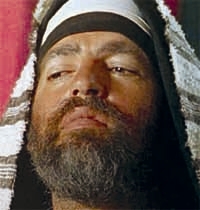 "Then
Jesus told his disciples a parable to show them that they should always
pray and not give up. He said: 'In a certain town there was a judge who
neither feared God nor cared about men. And there was a widow in that
town who kept coming to him with the plea, "Grant me justice against
my adversary." For some time he refused. But finally he said to himself,
"Even though I don't fear God or care about men, yet because this
widow keeps bothering me, I will see that she gets justice, so that she
won't eventually wear me out with her coming!" ' And the Lord said,
'Listen to what the unjust judge says. And will not God bring about justice
for his chosen ones, who cry out to him day and night? Will he keep putting
them off? I tell you, he will see that they get justice, and quickly.
However, when the Son of Man comes, will he find faith on the earth?'
" (Luke 18:1-8).
"Then
Jesus told his disciples a parable to show them that they should always
pray and not give up. He said: 'In a certain town there was a judge who
neither feared God nor cared about men. And there was a widow in that
town who kept coming to him with the plea, "Grant me justice against
my adversary." For some time he refused. But finally he said to himself,
"Even though I don't fear God or care about men, yet because this
widow keeps bothering me, I will see that she gets justice, so that she
won't eventually wear me out with her coming!" ' And the Lord said,
'Listen to what the unjust judge says. And will not God bring about justice
for his chosen ones, who cry out to him day and night? Will he keep putting
them off? I tell you, he will see that they get justice, and quickly.
However, when the Son of Man comes, will he find faith on the earth?'
" (Luke 18:1-8).
 In
this parable there are just two characters—the unjust judge and the
persistent widow. The woman had a righteous case. The judge knew that
he could and should help her, but he refused to do so, for no other reason
than to show his authority. He was indifferent and hardhearted, and he
was aloof. But she pressed her petition so hard that the judge finally
had to give heed. "Even though I don't fear God or care about men,"
he said, "yet because this widow keeps bothering me, I will see that
she gets justice, so that she won't eventually wear me out with her coming!"
(Luke 18:4, 5). And so, to save time and annoyance, he decided the case
in her favor.
In
this parable there are just two characters—the unjust judge and the
persistent widow. The woman had a righteous case. The judge knew that
he could and should help her, but he refused to do so, for no other reason
than to show his authority. He was indifferent and hardhearted, and he
was aloof. But she pressed her petition so hard that the judge finally
had to give heed. "Even though I don't fear God or care about men,"
he said, "yet because this widow keeps bothering me, I will see that
she gets justice, so that she won't eventually wear me out with her coming!"
(Luke 18:4, 5). And so, to save time and annoyance, he decided the case
in her favor.
Jesus declared that, if the unjust judge would avenge this mistreated widow, "Will not God bring about justice for his chosen ones, who cry out to him day and night? Will he keep putting them off? I tell you, he will see that they get justice, and quickly" (Luke 18:7, 8).
For long centuries sinful men have lived in transgression of God's holy law. They act as though the Great Judge knows nothing about their deeds. "How can God know? Does the Most High have knowledge?" (Psalm 73:11). But the time is coming when this godless element will exceed the bounds of mercy, and God's long suffering patience will end. Then the Lord will take the wicked in hand and work on behalf of His own honor—and to justify His faithful people.
In this time of God's judgments (see Revelation 16), the loyal followers of the Good Shepherd will find protection and deliverance (see Matthew 25:31-46).
"There will be a time of distress such as has not happened from the beginning of nations until then. But at that time your people—everyone whose name is found written in the book—will be delivered" (Daniel 12:1).
If God Himself is to undertake the punishment of the wicked, should we not forsake all bitterness, malice, and the holding of grudges against them? " 'It is mine to avenge; I will repay,' says the Lord" (Romans 12:19). Forget the injustices you have suffered. Forgive your enemies and pray for them. This is the spirit of Christ.
THE
PARABLE OF THE LOST SHEEP
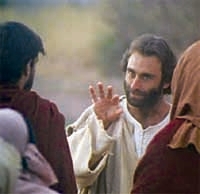 "Now
the tax collectors and 'sinners' were all gathering around to hear him.
But the Pharisees and the teachers of the law muttered, 'This man welcomes
sinners and eats with them.' Then Jesus told them this parable: 'Suppose
one of you has a hundred sheep and loses one of them. Does he not leave
the ninety-nine in the open country and go after the lost sheep until
he finds it? And when he finds it, he joyfully puts it on his shoulders
and goes home. Then he calls his friends and neighbors together and says,
"Rejoice with me; I have found my lost sheep." I tell you that
in the same way there will be more rejoicing in heaven over one sinner
who repents than over ninety-nine righteous persons who do not need to
repent' " (Luke 15:1-7).
"Now
the tax collectors and 'sinners' were all gathering around to hear him.
But the Pharisees and the teachers of the law muttered, 'This man welcomes
sinners and eats with them.' Then Jesus told them this parable: 'Suppose
one of you has a hundred sheep and loses one of them. Does he not leave
the ninety-nine in the open country and go after the lost sheep until
he finds it? And when he finds it, he joyfully puts it on his shoulders
and goes home. Then he calls his friends and neighbors together and says,
"Rejoice with me; I have found my lost sheep." I tell you that
in the same way there will be more rejoicing in heaven over one sinner
who repents than over ninety-nine righteous persons who do not need to
repent' " (Luke 15:1-7).
As Jesus speaks, we learn that before the great day of vengeance, the Good Shepherd will make every effort to bring all his wandering sheep into the fold. In this parable of the lost sheep, we notice four points:
1. Only one sheep went astray. To recover this lost sheep the Good Shepherd left the ninety-nine in the wilderness and went out to seek the one wandering stray. This is to teach us that God loves the lost as well as those within the fold (see Ezekiel 34:12). One sheep is the very least that can be numbered. So if there had been only one lost soul, Christ would have died for that one.
2. The lost sheep is helpless. "Apart from me you can do nothing," Jesus says (John 15:5). There is no way for the lost sinner to return to God except through Him (see Acts 4:12). We are lost without Christ. If the shepherd in the parable had not recovered this needy little stray sheep, it would have been devoured by wolves or plunged to its death over a precipice. We are just as helpless as lost sheep, but divine love has devised a plan for our rescue. The Good Shepherd seeks to take us in His arms and bring us back to God.
 3.
The shepherd loves the lost sheep. When the shepherd knows that
one of his sheep is missing, he is filled with anxiety and cannot sleep.
So, in the middle of the night, he gets up and goes out in search of the
wanderer. Making sure that the ninety-nine are safe within the fold, he
proceeds on his perilous way. No effort is spared. His life is in danger,
but he has only one urge—to recover that one stray sheep.
3.
The shepherd loves the lost sheep. When the shepherd knows that
one of his sheep is missing, he is filled with anxiety and cannot sleep.
So, in the middle of the night, he gets up and goes out in search of the
wanderer. Making sure that the ninety-nine are safe within the fold, he
proceeds on his perilous way. No effort is spared. His life is in danger,
but he has only one urge—to recover that one stray sheep.
4. The lost is found. Following a lonely trail, hour after hour, at last the shepherd hears a faint cry in the distance. Led by that pitiful sound, he comes to the edge of a great precipice. There the shepherd sees the little creature stranded on a ledge. Reaching down from the perilous height, he seizes the lost sheep, now about to die, and pulls the helpless animal to safety. And what does he do—punish the little thing? No! Bruised and bleeding as it is, he takes it in his arms and presses it to his bosom, where the warmth of his own heart flows out to revive it. With gratitude to God, he returns, binds up its wounds, and places it back in the fold.
The parable ends with the shepherd calling his friends and neighbors together and saying, "Rejoice with me; I have found my lost sheep" (Luke 15:6). Then there is thanksgiving, with songs of melody and praise. What a beautiful picture of the rejoicing in heaven over one repentant soul who turns to the Good Shepherd for salvation!
THE
PARABLE OF THE LOST COIN
 In
the parable of the lost sheep, Jesus represented those who are lost in
sin and want to come back. These He is able and willing to save. The parable
of the lost coin represents those who are lost and do not realize it.
These, too, He is able to save. Listen to His words:
In
the parable of the lost sheep, Jesus represented those who are lost in
sin and want to come back. These He is able and willing to save. The parable
of the lost coin represents those who are lost and do not realize it.
These, too, He is able to save. Listen to His words:
"Or suppose a woman has ten silver coins and loses one. Does she not light a lamp, sweep the house and search carefully until she finds it? And when she finds it, she calls her friends and neighbors together and says, 'Rejoice with me; I have found my lost coin.' In the same way, I tell you, there is rejoicing in the presence of the angels of God over one sinner who repents" (Luke 15:8-10).
The lost sheep wandered into the mountains away from home—far, far away. But the coin was lost in the house—nearby, close at hand. Even so, the coin could be recovered only by careful searching. Jesus must have been thinking of families and homes when He taught this parable, for there were many parents and children in the large crowd that listened to His earnest teaching.
 Sometimes
the spiritual needs of the children growing up by our side in the home
are ignored. Family worship is neglected. The singing of hymns and gospel
songs, the voice of prayer, and the reading of the Bible are not heard
as often as they should be. Many parents seldom, if ever, talk to their
children about the Good Shepherd. And they are careless about attending
church themselves. Are not these children, or even their parents, the
lost coins of today?
Sometimes
the spiritual needs of the children growing up by our side in the home
are ignored. Family worship is neglected. The singing of hymns and gospel
songs, the voice of prayer, and the reading of the Bible are not heard
as often as they should be. Many parents seldom, if ever, talk to their
children about the Good Shepherd. And they are careless about attending
church themselves. Are not these children, or even their parents, the
lost coins of today?
In order to find her lost coin, the woman had to light a candle. Then she and the other members of the household looked everywhere for it. Should we not light the candle of Bible truth in our homes and seek to win our children to God—and also our family and friends? Begin now to pray for the salvation of some particular one who is outside the fold of safety. Why not enroll him or her in this Bible course on the life of Christ? God will help you to win that very person to the love and care of the Good Shepherd.
THE
PARABLE OF THE PRODIGAL SON
(Read Luke 15:11-32)
The parable of the prodigal son has also been called the story of the
forgiving father. The prodigal represents those who are lost in sin, those
who shrug their shoulders and ask, "Who cares?" They are bent
on the pleasures of today and do not think about the future. The past
holds no lessons for them. All they want is a good time now.
The young son in the parable asks for the inheritance that would come to him at his father's death. He is impatient and can't wait until the money is in his hands. So he receives his inheritance, gathers together his camels, sheep, and cattle, loads his beasts of burden with bolts of costly cloth and spices and the money he has obtained, and hastens to his father's house for a quick goodbye. Then he is gone!
 In
the "distant country" to which he goes, he spends his fortune
in "wild living." This goes on for weeks and months. Then his
cash dwindles to a few Roman pennies. He must sell some of his possessions
to provide money for his adventure. But now he is down to his last animal.
His servants and friends desert him. There is nothing left now. Virtue
and health have long since fled. He is left alone—sick and dejected.
In
the "distant country" to which he goes, he spends his fortune
in "wild living." This goes on for weeks and months. Then his
cash dwindles to a few Roman pennies. He must sell some of his possessions
to provide money for his adventure. But now he is down to his last animal.
His servants and friends desert him. There is nothing left now. Virtue
and health have long since fled. He is left alone—sick and dejected.
In order to live, he gets a job tending pigs. What a situation for a Jew! But this is not the end of the story. He "came to his senses," the Savior said (Luke 15:17. He begins to realize his wretchedness. Satan's deceptive power is broken. He reasons from cause to effect and sees that he is suffering as a result of his own foolishness. At first, he had thought that his father was to blame for his unhappiness, because he had been too strict, too religious. Now the son realizes that his father was right, and that he was wrong. "I will set out and go back to my father," he says (Luke 15:18). He understands now that his father has loved him all the time, but it had never dawned on him before. Indeed, it is the father's love that has awakened his conscience. Why has he been so foolish?
 So
he starts home. The father has been waiting for his boy, watching day
by day, week by week, praying and hoping. As the son approaches the old
home, the father sees him "a long way off" (Luke 15:20). Yes,
he sees his son before the boy sees him. When the returning prodigal is
within sight, the father runs to meet him. With great compassion he takes
him in his arms in a long, fond embrace. He "was filled with compassion
for him; he ran to his son, threw his arms around him and kissed him,"
the Bible says (Luke 15:20). It is a beautiful picture—this homecoming
of the prodigal son and the father's wonderful love.
So
he starts home. The father has been waiting for his boy, watching day
by day, week by week, praying and hoping. As the son approaches the old
home, the father sees him "a long way off" (Luke 15:20). Yes,
he sees his son before the boy sees him. When the returning prodigal is
within sight, the father runs to meet him. With great compassion he takes
him in his arms in a long, fond embrace. He "was filled with compassion
for him; he ran to his son, threw his arms around him and kissed him,"
the Bible says (Luke 15:20). It is a beautiful picture—this homecoming
of the prodigal son and the father's wonderful love.
Then there is feasting and rejoicing. The weak, emaciated boy is extremely repentant. "Father," he says, "I have sinned against heaven and against you. I am no longer worthy to be called your son" (Luke 15:21). He is about to add, "Make me like one of your hired men" (Luke 15:19), but his father gives him no chance. "Quick! Bring the best robe and put it on him," he orders. "Put a ring on his finger and sandals on his feet. Bring the fattened calf and kill it. Let's have a feast and celebrate. For this son of mine was dead and is alive again; he was lost and is found" (Luke 15:22-24). And they began to be merry.
This thrilling scene of reunion and sweet harmony represents the welcome that God extends to all repentant sinners who will return to Him.
THE
STORY OF THE GREAT SUPPER
(Read Luke 14:15-24)
While in Jerusalem, Jesus attended a feast in the home of a prominent
Pharisee. Gathered about the table were many distinguished guests who
were curious, but not friendly to Christ, and they watched His every move
hoping to find an accusation against Him as a reason for taking His life.
They had hardened their hearts and rejected Christ's invitation to repent.
This feast gave Jesus an opportunity to show these men the results of
the evil course they were following.
 He
told of a man who made a great supper and invited many guests. At a stated
time his servant called on them saying, "Come, for everything is
now ready" (Luke 14:17). But those favored people began to make excuses.
One man, a farmer, had bought a new piece of property and wanted to go
and see it. Another had purchased five pairs of oxen and wished to try
them out. Another man had just married and wanted to stay with his wife.
He
told of a man who made a great supper and invited many guests. At a stated
time his servant called on them saying, "Come, for everything is
now ready" (Luke 14:17). But those favored people began to make excuses.
One man, a farmer, had bought a new piece of property and wanted to go
and see it. Another had purchased five pairs of oxen and wished to try
them out. Another man had just married and wanted to stay with his wife.
So the frustrated servant came back and told his master what had happened. This made him angry, and he commanded:
"Go out quickly into the streets and alleys of the town and bring in the poor, the crippled, the blind and the lame" (Luke 14:21).
After the servant did as he was told, he returned and said, "Sir, . . . what you ordered has been done, but there is still room" (Luke 14:22). So the master said:
"Go out to the roads and country lanes and make them come in, so that my house will be full" (Luke 14:23).
These substitute guests responded gladly to the invitation and came to the feast from far and near. But the master was angry with those who had shunned his invitation. Jesus concluded, "I tell you, not one of those men who were invited will get a taste of my banquet" (Luke 14:24).
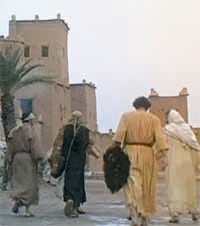 The
leaders of Israel had despised the invitation of the Lord from heaven
and had rejected His calls of mercy. So the apostles were told to seek
out others from among the Gentiles to take their place. This parable teaches
the following lessons:
The
leaders of Israel had despised the invitation of the Lord from heaven
and had rejected His calls of mercy. So the apostles were told to seek
out others from among the Gentiles to take their place. This parable teaches
the following lessons:
1. Those who say to God, "That's enough for now! You may leave. When I find it convenient, I will send for you" (Acts 24:25), run the risk of losing their place in His kingdom.
2. God will turn from those who despise the light of truth and invite those to follow Him who are receptive—the poor, the hungry, the naked—those who appreciate His mercies. Jesus once said to the astonished priests and elders, "The tax collectors and the prostitutes are entering the kingdom of God ahead of you" (Matthew 21:31).
3. The gospel is to go to all the world—into the highways and byways, to the high and the lowly—that God's house may be filled with guests when Christ returns to this earth for them. Here the Savior pointed to the work of the gospel, the final call of mercy to be made in the highways and byways of the whole wide world. That call is now being sounded. Have you accepted it? Have you heard the voice of the Good Shepherd? Are you following Him? The promise is:
"My sheep listen to my voice; I know them, and they follow me. . . . My Father, who has given them to me, is greater than all; no one can snatch them out of my Father's hand" (John 10:27, 29).

**********************************************************************
Original
manuscript author: Beatrice S. Neall
Editors revised edition: Barbara Shelley, Sue Robinson
Design and Layout: DEC Designs, Morisset, New South Wales Australia.
Used by permission of Discovery Centre, Wahroonga, New South Wales, Australia.
Graphics: Still images taken from Matthew video, copyright © 1997,
2004 by International Bible Society. Used by permission of International
Bible Society.
Scripture: Scripture taken from the HOLY BIBLE, NEW INTERNATIONAL VERSION
®. Copyright © 1973, 1978, 1984 by International Bible Society.
Cover Picture: "The Light of the World" by Nathan Green, ©2004
All Rights Reserved.
www.hartclassics.com
Copyright © 2007
revised edition, Voice of Prophecy, California.