Light of the World
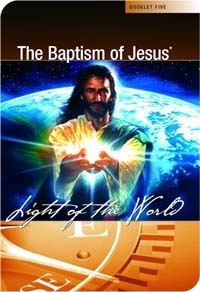
Booklet 5
The
Baptism of Jesus*
"At that time Jesus came from Nazareth in Galilee and was baptized by John in the Jordan" (Mark 1:9).
When we last saw Jesus, He was busy at the carpenter's bench in Nazareth. During the eighteen years from His Passover visit to Jerusalem until the time of His baptism in the Jordan River, Jesus performed the ordinary work of a craftsman. In this booklet, we see how He laid aside His hammer and saw and began an entirely new phase of His life.
News had reached Nazareth of the great revival caused by the preaching of John the Baptist. This was the prophetic signal (see Isaiah 40:3-5) for Jesus to say goodbye to His mother and make His way with the crowds that were traveling southward to the Jordan. The time had come for Him to begin His public ministry and, as God's spokesman, to announce to Israel the good news of His kingdom!
 JESUS
PRESENTS HIMSELF TO JOHN
JESUS
PRESENTS HIMSELF TO JOHN
The Scriptures state that Jesus came to the Jordan "to be baptized
by John" (Matthew 3:13). That was the immediate reason for His journey
from Nazareth.
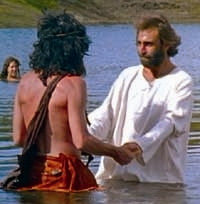
"Then Jesus came from Galilee to the Jordan to be baptized by John" (Matthew 3:13).
Jesus was not baptized because He was a sinner. He was uncorrupted by the sins of Nazareth. He was "holy, blameless, pure" (Hebrews 7:26). He sought baptism because He wished to identify Himself with men and women and to set an example for all to follow.
Although we do not know the exact spot where Jesus was baptized, we do know that this important event in His life took place in the Jordan River not too far from the city of Jericho, where John the Baptist was preaching and baptizing.
In the original Greek language of the New Testament, the expression "in the Jordan" (Mark 1:9) reads "into the Jordan." So we see that John took Jesus out into the waters of the Jordan River to be baptized.
"Now Jesus himself was about thirty years old" (Luke 3:23) at the time of His baptism. Thirty years from the time of His birth in 4 B.C. would bring us to A.D. 27, the year that Jesus was baptized.
 WHO
WAS JOHN THE BAPTIST?
WHO
WAS JOHN THE BAPTIST?
John the Baptist, or Baptizer, was the forerunner of Christ and was
the first to announce Jesus' coming kingdom.
He was a mighty preacher of righteousness, and the nation of Israel was stirred by his threefold message. He preached repentance, the arrival of Christ as the Messiah, and that the kingdom of God was at hand. Centuries before, Isaiah had prophesied that John would come and do this work.
The prophet spoke of him as:
"A voice of one calling: 'In the desert prepare the way for the Lord' " (Isaiah 40:3).
 John's
work made it easier for Christ to gain the attention of the multitudes
and attract them to His wonderful teachings. Being a man of strong personality
and filled with the Spirit, John the Baptist made a powerful impression
upon the people. His dress was of camel's hair, his diet simple. He rebuked
sin and taught the truth in plain, easily understood language.
John's
work made it easier for Christ to gain the attention of the multitudes
and attract them to His wonderful teachings. Being a man of strong personality
and filled with the Spirit, John the Baptist made a powerful impression
upon the people. His dress was of camel's hair, his diet simple. He rebuked
sin and taught the truth in plain, easily understood language.
John's birth was a miracle, but he worked no miracles (see John 10:41). Zechariah, his father, and Elizabeth, his mother, were both elderly at the time of his birth (see Luke 1:5-25, 36, 37). Elizabeth and Mary, the mother of Jesus, were cousins, and John was born six months prior to the birth of Jesus (see Luke 1:26-40, 56, 57). Apparently John and Jesus never became acquainted until the time of Jesus' baptism in the Jordan River. John was reared in the silent hills of Judea, many miles to the south of Nazareth of Galilee, where Jesus spent His early life.
JOHN
HESITATES TO BAPTIZE JESUS
When Jesus requested John to baptize Him, the prophet was doubtful
that he was qualified to perform that sacred rite.
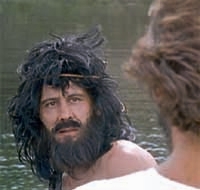 Never
before had John perceived such purity in any human being. The atmosphere
about Jesus was awe inspiring, and John felt himself to be a sinner in
the presence of this Holy One. The Holy Spirit impressed him that He who
stood before him was the Son of God. How could he baptize the Sinless
One? And why should Jesus request baptism? He had no sins to mar His record.
There was no stain of iniquity upon His soul. So John, in his humility,
suggested that the process be reversed and that Jesus baptize him. The
Scripture reads:
Never
before had John perceived such purity in any human being. The atmosphere
about Jesus was awe inspiring, and John felt himself to be a sinner in
the presence of this Holy One. The Holy Spirit impressed him that He who
stood before him was the Son of God. How could he baptize the Sinless
One? And why should Jesus request baptism? He had no sins to mar His record.
There was no stain of iniquity upon His soul. So John, in his humility,
suggested that the process be reversed and that Jesus baptize him. The
Scripture reads:
"But John tried to deter him, saying, 'I need to be baptized by you, and do you come to me?' Jesus replied, 'Let it be so now; it is proper for us to do this to fulfill all righteousness.' Then John consented" (Matthew 3:14, 15).
So Jesus was baptized by John. As we study Christ's life, we see that every act was filled with significance. His baptism was intended to teach the lesson that all who believe in Him should be baptized as He was.
WHAT
SIGNS MARKED JESUS' BAPTISM?
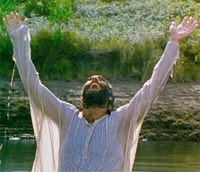 As
soon as Jesus was baptized, he went up out of the water. At that moment
heaven was opened, and he saw the Spirit of God descending like a dove
and lighting on him" (Matthew 3:16).
As
soon as Jesus was baptized, he went up out of the water. At that moment
heaven was opened, and he saw the Spirit of God descending like a dove
and lighting on him" (Matthew 3:16).
The Spirit of God in the form of a dove rested upon Christ immediately after He came up "out of the water." In this way, the heavenly Father anointed His Son for service. Now Christ would be able to accomplish His work of building God's kingdom of righteousness in the hearts of men and women. With the Spirit's presence, He could discharge His mission as mankind's Redeemer. And He could also, as John said, "baptize . . . with the Holy Spirit" (Mark 1:8). Christ later made the promise, which was fulfilled at Pentecost, that all who receive him as Lord and Savior would receive the gift of the Holy Spirit (see John 14:16, 17, 26; 15:26; 16:7-11).
Immediately after the Spirit fell upon Christ, the Father gave another token of His divine relationship to him:
"And a voice from heaven said, 'This is my Son, whom I love; with him I am well pleased' " (Matthew 3:17).
Jesus recognized the approving voice of His Father in the words, "This is my Son, whom I love; with him I am well pleased."
Christ was now about to enter upon His public ministry. The spiritual kingdom that He had come to establish was not the kind of kingdom the people were looking for. They were expecting a political Messiah to deliver them from Roman bondage. Many would be disillusioned by His preaching and teaching. There were great conflicts ahead for the Savior, and the heavenly Father wanted to encourage and strengthen His Son to press forward in His work—hence the Spirit's presence and the voice of God's approval. The Man whom John had baptized was indeed the Messiah, the Hope of Israel, and the Light of the world.
JOHN
ACKNOWLEDGES THE MESSIAH
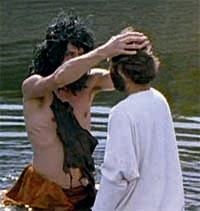 These
events led John to express his convictions about Christ as follows:
These
events led John to express his convictions about Christ as follows:
"I saw the Spirit come down from heaven as a dove and remain on him. I would not have known him, except that the one who sent me to baptize with water told me, 'The man on whom you see the Spirit come down and remain is he who will baptize with the Holy Spirit.' I have seen and I testify that this is the Son of God." (John 1:32-34).
John discerned the Spirit of God resting in dove-like form upon Christ. He also heard the voice of the Father speaking from heaven, acknowledging Jesus to be His Son. By these two signs John recognized the identity of Jesus as the Messiah whose coming he had been preaching. He knew that it was the world's Redeemer whom he had baptized. His faith was expressed in his open declaration to the people:
"Look, the Lamb of God, who takes away the sin of the world!" (John 1:29).
These words of John the Baptist prepared the way for many to accept Jesus as the Messiah, or Anointed One (see Acts 10:38).
CLOSING
DAYS OF JOHN'S MINISTRY
During the months that immediately followed the baptism and temptation
of Christ, the multitudes in Judea turned away from John and fixed their
attention upon the One to whom he had directed them as the Son of God.
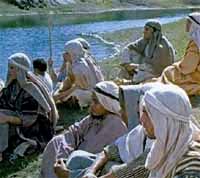 The
crowds who followed John became smaller and smaller, but the people flocked
to hear Christ. Many openly acknowledged their loyalty to Jesus after
hearing Him preach. The disciples of John were trouble about this and
complained to him. They looked with jealousy upon Christ and made it known
to the Baptist that they did not appreciate the work Jesus was doing.
Here is the record:
The
crowds who followed John became smaller and smaller, but the people flocked
to hear Christ. Many openly acknowledged their loyalty to Jesus after
hearing Him preach. The disciples of John were trouble about this and
complained to him. They looked with jealousy upon Christ and made it known
to the Baptist that they did not appreciate the work Jesus was doing.
Here is the record:
"Now John also was baptizing at Aenon near Salim, because there was plenty of water, and people were constantly coming to be baptized. . . . They [John's disciples] came to John and said to him, 'Rabbi, that man who was with you on the other side of the Jordan—the one you testified about—well, he is baptizing, and everyone is going to him" (John 3:23, 26).
John was not troubled by their complaints, but rejoiced in the Savior's popularity.
"To
this John replied, 'A man can receive only what is given him from heaven.
You yourselves can testify that I said, "I am not the Christ but
am sent ahead of him." The bride belongs to the bridegroom. The friend
who attends the bridegroom waits and listens for him, and is full of joy
when he hears the bridegroom's voice. That joy is mine, and it is now
complete. He must become greater; I must become less' " (John
3:27-30).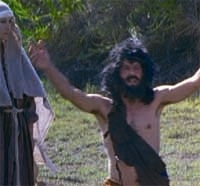
John represented himself to his disciples as the best man at a wedding. Such a person helps to prepare for the marriage and the feast that follows. In this illustration, John pointed to Christ as the groom and to the church as the bride. It was John's work to bring Christ and the church together in the closest relationship. The Baptist had been called to direct the people to Jesus, and it was his pleasure to witness the success of the Savior's work. "That joy is mine, and it is now complete. He must become greater, and I must become less."
What a lesson we can learn from John's humility! By nature he was a forceful and rugged character, but he was willing to put Christ first.
Jesus later paid this tribute to John:
"What did you go out into the desert to see? A reed swayed by the wind? If not, what did you go out to see? A man dressed in fine clothes? No, those who wear expensive clothes and indulge in luxury are in palaces. But what did you go out to see? A prophet? Yes, I tell you, and more than a prophet. This is the one about whom it is written: 'I will send my messenger ahead of you, who will prepare your way before you.' I tell you, among those born of women there is no one greater than John" (Luke 7:24-28).
Dean Farrar, a distinguished Christian writer, said:
The nature of St.
John the Baptist was full of impetuosity and fire. The long struggle which
had given him so powerful a mastery over himself—which had made him
content with self obliteration before the presence of his Lord—which
had inspired him with fearlessness in the face of danger, and humility
in the midst of applause—had left its traces in the stern character
and aspect and teaching of the man. . . . His very teaching reflected
the imagery of the wilderness—the rock, the serpent, the barren tree.
"In his manifestation and agency," it has been said, "he
was like a burning torch; his public life was quite an earthquake—the
whole man was a sermon; he might well call himself a voice—the voice
of one crying in the wilderness, Prepare ye the way of the Lord"
(Life of Christ), page 57.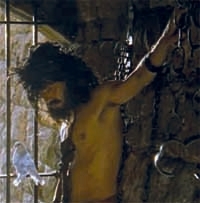
Some time after the baptism of Jesus, John was imprisoned by Herod the Tetrarch, an evil ruler. The historian, Flavius Josephus, tells us that John's imprisonment was in the fortress of Machaerus, near the north end of the Dead Sea. John had rebuked Herod's adulterous life, and he paid for his fearless act with his life. But in the face of death John received a cheering message from Jesus (see Matthew 14:1-12; 11:2-6).
In the death of John, Jesus must have seen a token of the gathering tempest that was to grow darker and more violent until He Himself would be crucified upon the cross. The same hatred of righteousness and truth that caused the wicked Herod to take the head of John the Baptist was responsible later for the cruel death of Jesus.
BAPTISM
A CHRISTIAN ORDINANCE
Not long after His baptism, Jesus began to gather about Him a group
of twelve men who became His disciples.
 Later,
He ordained them, and they baptized as John had (see John 3:22; 4:2).
Thus Christ set His approval on the Baptist's work. After His death and
resurrection, Jesus gave this special group—His disciples—the
command to go into all the world and make disciples, first teaching, and
then baptizing them in the name of the Father, Son, and Holy Spirit (see
Matthew 28:18-20). Only those who accepted the lordship of Jesus, His
words and teachings and saving power, and who gave evidence of repentance,
were to be baptized. That command of Christ is still in force today and
will be until the end of the world. Here are His words:
Later,
He ordained them, and they baptized as John had (see John 3:22; 4:2).
Thus Christ set His approval on the Baptist's work. After His death and
resurrection, Jesus gave this special group—His disciples—the
command to go into all the world and make disciples, first teaching, and
then baptizing them in the name of the Father, Son, and Holy Spirit (see
Matthew 28:18-20). Only those who accepted the lordship of Jesus, His
words and teachings and saving power, and who gave evidence of repentance,
were to be baptized. That command of Christ is still in force today and
will be until the end of the world. Here are His words:
"Therefore go and make disciples of all nations, baptizing them in the name of the Father and of the Son and of the Holy Spirit. . . . And surely I am with you always, to the very end of the age" (Matthew 28:19, 20).
WHAT
IS THE MEANING OF BAPTISM?
Baptism represents a threefold experience in the Christian life—death,
burial, and resurrection. Paul said:
"Or don't you know that all of us who were baptized into Christ Jesus were baptized into his death? We were therefore buried with him through baptism into death in order that, just as Christ was raised from the dead through the glory of the Father, we too may live a new life" (Romans 6:3, 4).
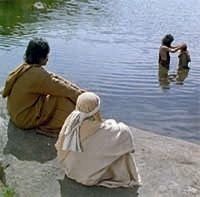 To
be buried with Christ in baptism signifies: (1) death to the selfish,
carnal nature, (2) a spiritual resurrection—living "a new life,"
and (3) the consent of the mind and heart to follow the example of Jesus
in all things that He commands. As we think about these three facts, it
becomes clear that immersion perfectly represents this experience
of death, burial and resurrection to a new life. Our English word
baptize comes from a Greek word which means "to dip" or "to
immerse."
To
be buried with Christ in baptism signifies: (1) death to the selfish,
carnal nature, (2) a spiritual resurrection—living "a new life,"
and (3) the consent of the mind and heart to follow the example of Jesus
in all things that He commands. As we think about these three facts, it
becomes clear that immersion perfectly represents this experience
of death, burial and resurrection to a new life. Our English word
baptize comes from a Greek word which means "to dip" or "to
immerse."
Before one is baptized as a follower of Christ, he ought to know what the Bible teaches so that his belief can be intelligent. He ought also to know in whom he believes. A mere profession of Christianity will save no one, even if he is baptized. Christianity is a life, not simply a religious philosophy. That life is Christ's life, which through the gospel is to be reproduced in the Christian. You, too, may live that life through faith in Jesus as your personal Savior.
"If you confess with your mouth, 'Jesus is Lord,' and believe in your heart that God raised him from the dead, you will be saved. . . . As the Scripture says, 'Anyone who trusts in him will never be put to shame' " (Romans 10:9, 11).
God acknowledges as His sons and daughters all who are baptized as Jesus was, with an intelligent understanding of the meaning of baptism and a true heart experience with God. To all who would follow the Lord in baptism, the following promise is made:
"Repent and be baptized, every one of you, in the name of Jesus Christ for the forgiveness of your sins. And you will receive the gift of the Holy Spirit" (Acts 2:38).
Then God's word is fulfilled:
 "Yet
to all who received him, to those who believed in his name, he gave the
right to become children of God" (John 1:12).
"Yet
to all who received him, to those who believed in his name, he gave the
right to become children of God" (John 1:12).
When an old Christian, who had experienced much joy in his life, was asked about the happiest day of his life, he said, "It was the day on which I was baptized."
A few of the New Testament characters who followed their Lord in baptism are: the believers at Pentecost (see Acts 2:41), the converts in Samaria (see Acts 8:12), the Ethiopian eunuch (see Acts 8:38), Saul of Tarsus, who became Paul the apostle (see Acts 9:18), the believers at Corinth (see Acts 18:8), the disciples at Ephesus (see Acts 19:1-5), and the household of Stephanas (see 1 Corinthians 1:16).
May we all show the willing spirit of the Ethiopian eunuch, who said:
" 'Look, here is water. Why shouldn't I be baptized?' Philip said, 'If you believe with all your heart, you may.' The eunuch answered, 'I believe that Jesus Christ is the Son of God.' And he gave orders to stop the chariot. Then both Philip and the eunuch went down into the water and Philip baptized him" (Acts 8:36-38, margin).

**********************************************************************
Original
manuscript author: Beatrice S. Neall
Editors revised edition: Barbara Shelley, Sue Robinson
Design and Layout: DEC Designs, Morisset, New South Wales Australia.
Used by permission of Discovery Centre, Wahroonga, New South Wales, Australia.
Graphics: Still images taken from Matthew video, copyright © 1997,
2004 by International Bible Society. Used by permission of International
Bible Society.
Scripture: Scripture taken from the HOLY BIBLE, NEW INTERNATIONAL VERSION
®. Copyright © 1973, 1978, 1984 by International Bible Society.
Cover Picture: "The Light of the World" by Nathan Green, ©2004
All Rights Reserved.
www.hartclassics.com
Copyright © 2007
revised edition, Voice of Prophecy, California.